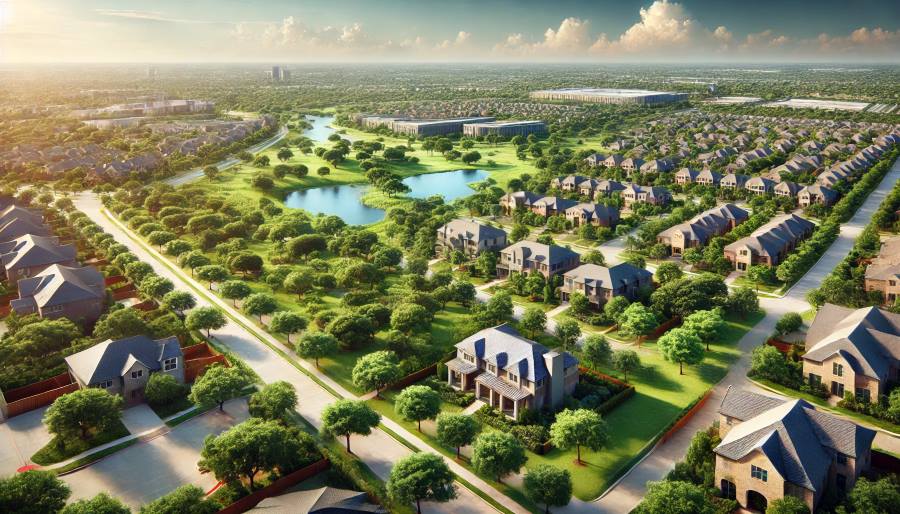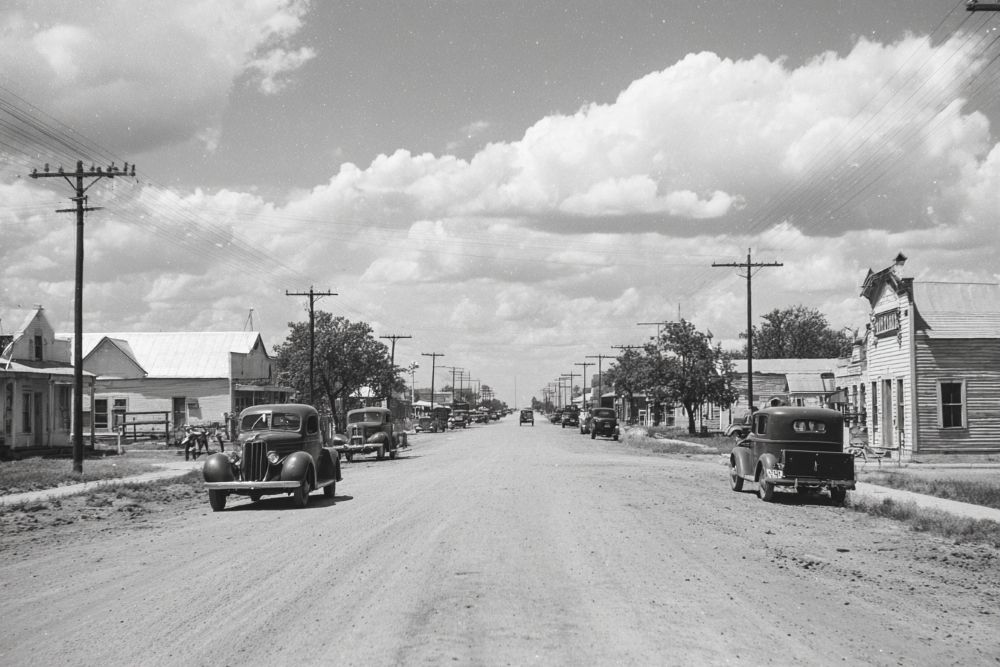
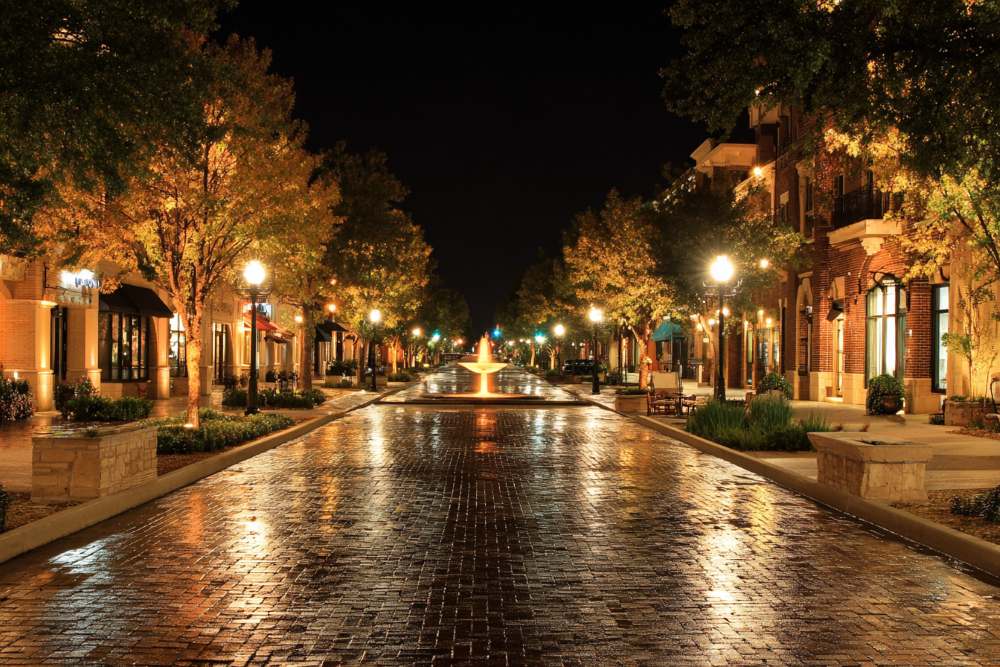
Frisco’s story reads like a Texas parable, except the ending keeps changing because the city keeps changing. There’s the original Frisco: a small rail stop built for the practical needs of steam engines and nearby farmers. Then there’s the modern Frisco: a fast-growing city in the Dallas-Fort Worth orbit where national headquarters, stadium lights, and master-planned neighborhoods have turned prairie into one of the metro’s most watched addresses.
To understand Frisco today, its skyline-by-suburb standards, its sports identity, its corporate pull, you have to start with something far less flashy: a trail, a ridge of white rock, and a water stop.
Long before Frisco had a “North Platinum Corridor” or championship venues, people moved through this part of North Texas along routes that mattered to survival and commerce. One of the most influential was the Preston Trail (today’s Preston Road), described as beginning as an Indigenous footpath and later overlapping with the Shawnee Trail, a major cattle-driving route. Frisco’s local history even points to a Texas historic marker about the Shawnee Trail located at Collin College’s Frisco Campus, a small detail that says a lot: modern Frisco sits on old movement patterns.
That movement helped anchor nearby settlements, especially Lebanon, founded along the trail and granted a U.S. post office in 1860.
But Lebanon sat on the Preston Ridge, and that elevation mattered once railroads entered the picture.
In 1902, a line of the St. Louis and San Francisco Railway was being built through the area. Steam locomotives needed periodic watering points, and Lebanon’s higher elevation wasn’t ideal for that purpose. So the watering stop, and the new activity around it, was placed roughly four miles west on lower ground. A community grew around the stop, and residents of Lebanon began relocating, sometimes dramatically, including stories of people moving houses to the new townsite.
The early naming history is a perfect example of how “unromantic” infrastructure decisions create towns:
Frisco wasn’t born from a courthouse square or a river port. It was born from rail logistics, and then it learned how to capitalize on location.
For decades, Frisco was what many North Texas communities were: an agricultural service point, a place where surrounding farms shipped and bought what they needed.
Historical records note that Frisco operated as a retail and shipping point for farmers, featuring multiple cotton gins and grain elevators, and even a Farmers Co-operative Gin Association.
Utilities and energy milestones tell a quieter “growth story” than population charts do:
In other words: Frisco’s first century was about being useful to the people around it. Its second century would be about being useful to the entire metroplex.
One of the most striking things about Frisco is that its population history doesn’t just go up. It waits for decades, then explodes.
Here’s a decennial snapshot widely published for Frisco:
And recent current-status sources show how fast the city is still moving:
What the numbers mean: Frisco spent much of the 1900s as a small town. Then, as the northward development wave pushed beyond Plano and the Dallas North Tollway corridor matured, Frisco became one of the metro’s most intense growth cases, fast enough to become a national reference point for the modern suburb.
Historical summaries tie Frisco’s jump (especially from the 1970s forward) to the growth of Dallas and Plano, changing regional industry, and the broader DFW economy.
But the Frisco secret wasn’t just proximity. It was positioning. The city increasingly organized itself to attract the kinds of projects that lock in long-term momentum: major venues, major employers, and a brand identity.
Many cities host sports. Frisco, unusually, built a civic identity around becoming a destination for sports, professional, amateur, and youth.
A few anchor facilities define that strategy:
Toyota Stadium (FC Dallas’ home) opened on August 6, 2005 (originally as Pizza Hut Park). Beyond matches, it hosts major events and national team games, reinforcing Frisco’s reputation as a soccer town in a football state.
The National Soccer Hall of Fame opened at Toyota Stadium with a major launch weekend in October 2018, and it’s described as a public-private partnership involving the City, school district, FC Dallas, and U.S. Soccer.
Riders Field (home of the Frisco RoughRiders) is a highly regarded ballpark that opened in 2003, earlier than many people realize when they assume Frisco’s sports boom started later.
Why this matters: sports venues don’t just sell tickets. They create year-round foot traffic, hospitality growth, family weekend travel, and the kind of name recognition that makes corporate recruiters and event planners pick up the phone.
When the Dallas Cowboys built their headquarters and training complex, The Star in Frisco, it wasn’t just a sports story. It was a civic-business story.
Frisco’s official partnership page outlines the public-private collaboration between the City, Frisco ISD, and the Cowboys, including the timeline: the partnership announcement (2013), groundbreaking (Aug. 22, 2014), and opening celebrations in 2016.
The Ford Center component is a multi-use indoor facility used not only by the Cowboys but also by local schools for major events, making the project feel less like a private fortress and more like a shared civic asset.
Once a city proves it can execute complex developments, the next wave is often corporate. Frisco has been aggressive about this, and the list of notable names is part of its current identity.
Frisco’s Economic Development messaging highlights the caliber of companies operating in the city. Examples include TIAA, PGA of America, T-Mobile, Precision Pest and Thomson Reuters.
In 2019, Keurig Dr Pepper announced it would relocate its Texas headquarters to The Star in Frisco, emphasizing the location’s amenities and talent attraction advantages.
The PGA of America’s Frisco campus officially opened in August 2022, framing Frisco as the organization’s home.
Why these moves compound: Headquarters and regional hubs pull in professional services, vendors, hospitality demand, and, most importantly, new residents with disposable income, which then fuels more retail, more schools, and more development.
That watering hole detail sounds minor, until you realize it effectively relocated a community’s center of gravity and created a new city.
The Shawnee Trail and Preston Trail connection is easy to miss in modern suburbia, yet it’s literally marked on a college campus.
The National Videogame Museum positions itself as an interactive place to experience games of yesterday, today and tomorrow, a very modern cultural note in a city often defined by sports and corporations.
Population and demographics: Frisco is now firmly in large city territory by Texas standards, and recent profiles show a diverse, highly educated, comparatively high-income suburban population typical of fast-growing job centers.
Economic posture: The city’s present-day profile is built on three reinforcing pillars:
Civic identity: Frisco still carries its origin story, railroad pragmatism, then agricultural utility, but it has reinvented itself into something more intentional: a city that uses planning, partnerships, and anchor projects to keep rewriting what a suburb can be.
Frisco’s most consistent trait isn’t any single industry, not rail, cotton, sports, or corporate towers. It’s the ability to treat geography as opportunity.
In 1902, opportunity was a water stop on lower ground. Today, opportunity is being the kind of city where a professional association can plant a national headquarters, where a global beverage company chooses a flagship campus, and where youth tournaments and pro venues share the same map.
That’s why Frisco has become bigger than a dot on a Texas map. It’s become a case study.